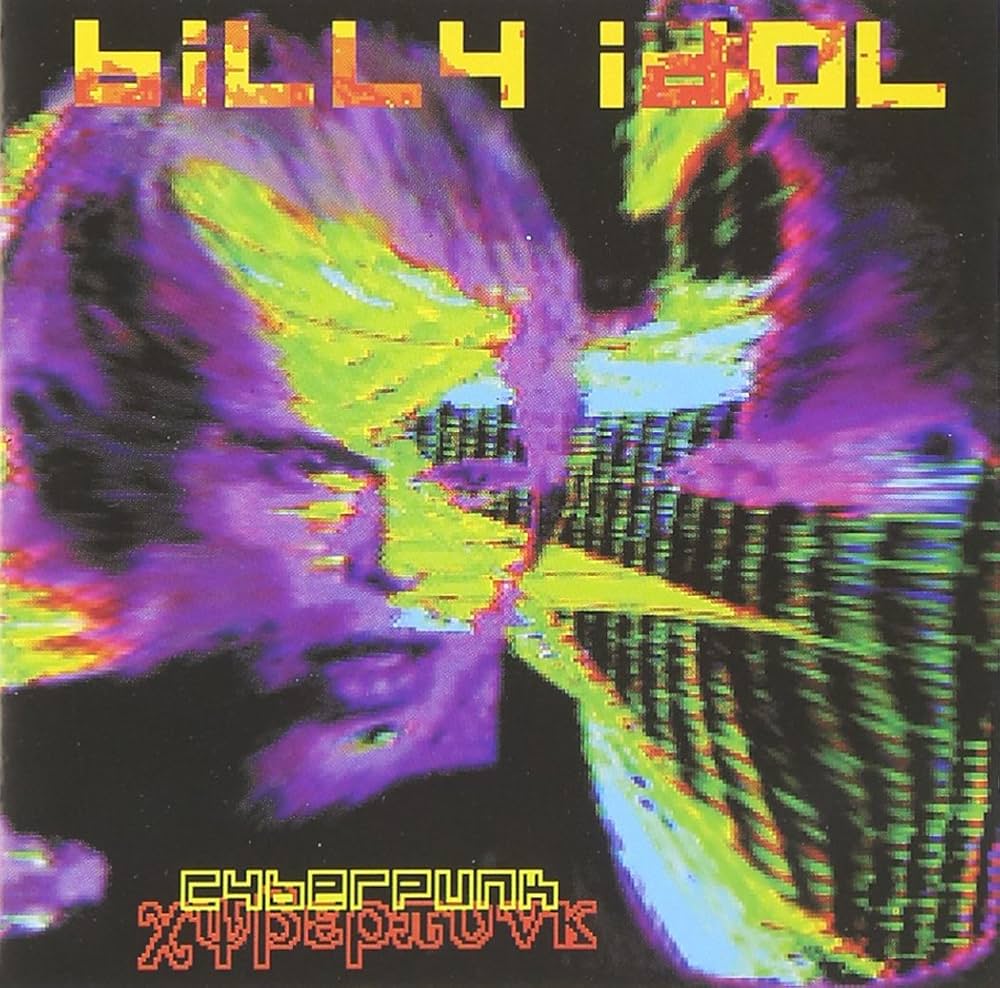
‘For William,’ wrote British rock singer Billy Idol in the sleeve notes of his 1993 album Cyberpunk. He was referring, of course, to Canadian author William Gibson, who more than any other creative figure has long been defined as the cyberpunk genre’s lead author. It emerged during a firestorm of criticism by the cyberpunk ‘scene’ that Idol had in fact never read Gibson’s novel Neuromancer, nor did his album engage in anything beyond a superficial way with the genre and its themes. It rapidly became something of a punching bag for anybody tired of commercial interests co-opting sub-cultures. It was neither a critical success nor a commercial hit. For his own part, Idol didn’t release another record for 12 years.
While the album undoubtedly stands as an attempt to profit from the cultural zeitgeist, and while it is far from the best expression of cyberpunk in popular music – that is still, probably unintentionally, Sigue Sigue Sputnik’s 1986 album Flaunt It – did it really deserve the critical walloping that it received? Yes and no, is the reasonably indecisive answer. There is plenty to mock in Idol’s ode to all things cybercultural, but there is also more than a little enjoyable pop rock. It isn’t Idol’s best album, but it is almost certainly his most underrated.
Cyberpunk does represent a shift for Idol’s production process from a more traditional analogue approach to a more electronic sound. Much of the album was recorded and mixed at home using a Macintosh computer and the Pro Tools software platform. Individual songs contain various audio samples from news coverage of the Los Angeles riots and films. In between the musical tracks are a variety of soundscapes and segues: Idol even quotes (with permission) media critic Gareth Branwyn in the album’s opening moments.
The enormous level of pretense involved is readily mockable, particularly the addition of the prefix “VR” during the chorus of Idol’s Lou Reed cover “Heroin”. I think appreciating the album requires an enthusiastic acceptance of that pretense. Within that condition, there is plenty to which one can bounce along. Second single “Shock to the System”, opportunistically rewritten to name-check the L.A. riots, is as strong a pop number as many of Idol’s earlier hits. “Neuromancer” and “Concrete Kingdom” have a lovely sort of early 90s electronica feel to them. It even climaxes well with the rockier “Then the Night Comes” and the cheesy and uplifting “Mother Dawn”.
There is shameless fun in Cyberpunk. A critical misfire for Billy Idol, for sure. Easily mockable? Absolutely. The fifth worst album of all time, as Q magazine claimed in 2006? Hardly.
Cyberpunk was Billy Idol’s fifth studio album. It was released on 28 June 1993.
 Disc Frenzy
Leave a comment